To the extent that I've done any work in the past few weeks, I've been collecting evidence of Tennyson's contact with two men he knew at Cambridge, and the general circulation of ideas among his Cambridge friends. All that history, combined with being at such a longstanding institution like Cambridge, made me start thinking about certain continuities across the ages. This is what C.S. Lewis called the Doctrine of the Unchanging Human Heart -- and he was (I think rightly) wary of reading literature with an eye only for what never changes about humanity. Obviously, we're also products of the times in which we live -- but some things never change. Everyone in the history of humanity has said something stupid or cruel, resented their parents, felt inadequate, fallen in love unrequitedly, etc., etc., etc. I list the bad things because it really is comforting to realize that any issues I could ever possibly have are part of the wonderful mess of being alive, and they've all been had before.
Caveats: 1) Many people face serious problems like starvation and genocide, I don't want to class those as part of a 'wonderful' anything.
2) I realize that this means that nothing has changed in ages, in a way that some people find depressing.
The other thing that comes forward when reading Tennyson-related letters is the fact that people used to be able to control their legacies to a greater extent. Tennyson's son collected lots of letters and recollections from the poet's friends, and he put them together into one of the authoritative sources of information about him. He literally cut and pasted the material into a draft scrapbook. Then he burned whatever didn't fit the narrative of a great Poet Laureate. This is horrifying for us, but then again, Tennyson himself hated the celebrity worship that led people to strip his front-lawn tree bare because they wanted souvenirs. Here's how one acquaintance explained it:
"He said...that the desiring anecdotes and acquaintance with the lives of great men was treating them like pigs to be ripped open for the public; that he knew he himself should be ripped open like a pig; that he thanked God Almighty with his whole heart and soul that he knew nothing, and that the world knew nothing, of Shakespeare but his writings; and that he thanked God Almighty that he knew nothing of Jane Austen, and that there were no letters preserved either of Shakespeare's or Jane Austen's..."
I can see how, from his point of view, it's none of our business what he wrote to friends. But it's sort of staggering how people could actually somewhat control what posterity would know about them. These thoughts bubble to the surface almost every time I write in my own diary. I'm not a famous anything, nor am I likely to be. So who is the audience, the potential reader, of my emotional unloading? Well, I primarily write for my own benefit -- to think through things and to remember details of day-to-day life years later. But by definition, writing is for transmitting ideas -- to whom? I often imagine some future historian using my rather banal diaries as material for reconstructing life at Stanford/Cambridge in the early 21st century. Then I wonder how amusing or annoying it will be for them to slog through the parts about boys or family or whatever bothers me from time to time. Oh well, it's not my job to adapt to a person who may not exist.
Tuesday, November 29, 2011

Tuesday, November 22, 2011
My lecture on "Tennyson's Cambridge"
Last week, I gave one of the weekly McMenemy Seminars at Trinity Hall. This is a chance for grad students to talk about their research to their peers. I wanted to make sure it was engaging for the crowd, though -- and to make sure there was a crowd at all -- so I talked about the context of Tennyson and his friends at Cambridge. Thanks to a borrowed digital recorder, I have the speech and have paired it with my slideshow. Sorry it sounds so rushed -- I went a bit over time! And maybe one day I'll get a better resolution video up, but the limitations of size are, well, limiting.
Thursday, November 10, 2011
Conferencing and coming "home"
As you all know, I'm prone to signing myself up for "too many" activities. It's usually possible to do them all, but the running around doing them often leaves little time or energy for studying. This has never been truer than this term, during which I have done essentially no research, unless you count writing various conference papers. Why? Because of the following:
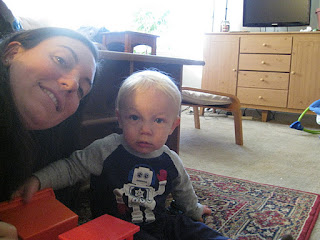 At least the last one might sort of produce material toward my PhD. Meanwhile, I took a trip to the North American Victorian Studies Association (NAVSA) annual conference. Although it was in Nashville, I first stopped to get my Disney World fix and then visited friends and my brother's family in Greensboro, NC. My little nephew is turning into quite the little man; he grabs you by the finger and walks you all around the house, or up and down the street, on a mission to find anything that might remotely be called a "choo-choo" -- i.e. anything with an engine, a toy thereof, or any screen that will show him a video of such a thing.

and a walk around autumnal Vanderbilt:

- Rowing
- Chapel choir
- Trinity Hall Boat Club co-women's lower boats' captain [scheduling novices]
- Supervising (teaching) a student on Old English
- Classes: Latin, Old English, Old English literature, Old English informal reading group
- Job(s): conference assistant, proofreading, soon to be library invigilating
- Writing conference papers
 At least the last one might sort of produce material toward my PhD. Meanwhile, I took a trip to the North American Victorian Studies Association (NAVSA) annual conference. Although it was in Nashville, I first stopped to get my Disney World fix and then visited friends and my brother's family in Greensboro, NC. My little nephew is turning into quite the little man; he grabs you by the finger and walks you all around the house, or up and down the street, on a mission to find anything that might remotely be called a "choo-choo" -- i.e. anything with an engine, a toy thereof, or any screen that will show him a video of such a thing.
The conference itself was fun (so many people to meet!), though I wish I'd had a chance to go out into Nashville proper. As it was, my excursions were restricted to a reception in the Parthenon reconstruction, with this gaudy-awful Athena statue:

and a walk around autumnal Vanderbilt:

It was a good trip, but I was also glad to arrive back home in Cambridge.
Thursday, October 20, 2011
Drowning in email & admin
Well, this is a less romantic post than many, for the same reason that it is rather delayed; I've simply been drowning in the amount of email and organization I have to handle every day. Because the new year has started! I'm officially a second-year PhD student, no longer probationary.
So far academically, I've been attending classes on Latin, Old English, and Old English literature. The latter two are especially motivated by the fact that I've gotten my first opportunity to supervise (teach) an undergraduate! Supervision can be hard to acquire here as teaching is arranged through each college separately, and you often have to know someone/leverage your supervisor's networking. However, there aren't many people who are able to teach Old English within the English faculty. Most serious scholars of that stuff are over in the ASNC department (Anglo-Saxon, Norse, and Celtic). Win for me. :D I've met with my student a couple times, and she's delightful. I worry that I don't know all the minutiae of the language or vocabulary, but the exam for which I'm prepping her is more focused on the literary angle, so I just keep telling myself that I know how to do that. Plus, having asked a few undergrads about good supervision techniques, I gather that I'm doing better than some...

I'm also co-captain of the novice rowers, which involves a fair amount of scheduling and such. Oh, and acting as 'external ents' [entertainments] officer for the MCR. You can see why my inbox has been clogged for a couple weeks.
Meanwhile, I have one week in which to get my paper in shape for the annual NAVSA conference (North American Victorian Studies Association). It's a big-ass conference, and I really want to do well at it; so of course I proposed to talk about a confusing, slippery poem that will easily turn you around until you can't sort out what your argument is. Fun times. :-/ But it will come together somehow or other.
For wading through all that, how about a picture? Here's the view from my bedroom window. Tree!
Sunday, September 18, 2011
Kemble's insults
I know, you're probably tired of hearing about John Mitchell Kemble. But I had so much fun running across his various insults that I thought I would compile them for your (ok, my) amusement. He didn't pull any punches, as you'll see.
On 18th-century attempts to get rid of strong verbs:
These truly original and groundforms of the language having been called irregular, a logical fallacy suggested to the purists that what was irregular must be wrong…the wind blew and the cock crew no longer, -- they now blowed and crowed. In short, these masters and doctors, though grammarians and lexicographers, knowed a thing or two less than they ought.
[Footnote in unpublished review of Jakob Grimm's Deutsche Grammatik, p. 38]
On interpreting Old English based on Old Norse:
I beg once and for all to say that Norse forms have nothing whatever to do with Anglo-Saxon inscriptions. It was by trusting to Norse forms that Thorkelin misread every line and mistranslated nearly every word of Beowulf. It is by trusting to Norse forms that Dr. Repp has plunged himself into his ludicrous Christ-basin, and that Finn Magnusen has recorded his own rashness throughout 105 of the most adventurous pages I ever remember to have read.
[Anglo-Saxon Runes p. 56]
On other scholars' work on the Ruthwell Cross:
It is enough to say, that no such language ever existed as they find on this stone...[Magnusen invents] a new language, in which he says the inscription is written, and a people, by whom he says the language was spoken.
[Anglo-Saxon Runes p. 41, 47]
On a former student who published something from his collection without his permission:
I had the pleasure of seeing my views travestied, my collections ill-used, and the whole subject on which I have long been working most groundedly and seriously, taken out of my hands, and miserably ill-treated in a flippant, superficial, wretched style, by a man who has not a thought on the subject but what he has picked up from me…He is a literary pirate, and as ignorant as he is impudent.
[Correspondence with Jakob Grimm, p. 112, 152]
On the Antiquarian Society's new committee:
Rather amusing that, is it not? A Saxon committee of which not one single member understands a word of Saxon.
[Correspondence with Jakob Grimm, p. 191]
On scholars clinging to old-fashioned and unnecessary Gothic typefaces:
It will be some time before the bibliomaniacal foppery of using these types ceases.
[Review of Analecta Anglo-Saxonica, p. 393]
On the most commonly-used Anglo-Saxon dictionary:
If ever a book was calculated to do harm, to retard the progress of study, to perplex and fill with trouble the mind of the learner, Lye’s Dictionary is assuredly that book.
[Review of Analecta Anglo-Saxonica p. 392]
On an anticipated new dictionary:
It will be a pitiful performance, for the man is as devoid of philology, as an ox of milk.
[Correspondence with Jakob Grimm, p. 57]
On the origin of Anglo-Saxon (aka Old English):
To suppose the Anglo-Saxon derived from a mixture of Old Saxon and Danish, is at once to stamp oneself ignorant both of Old Saxon, Old Norse, and Anglo-Saxon, and to declare one's incompetency to pass a judgment on the subject.
[Preface to Beowulf, p. xxii]
On the British Anglo-Saxonist establishment:
We could mention, were we so inclined, Doctors, yea, Professors of Anglo-Saxon, whose doings in the way of false concords, false etymology, and ignorance of declension, conjugation and syntax, would, if perpetrated by a boy in the second form of a public school, have richly merited and been duly repaid by a liberal application of ferula or direr birch.
[Review of Analecta Anglo-Saxonica]
The Oxford men have been railing at me, and at you too worse than the frogs at Latona: you will say as I do [Greek] which in plain English is, they may kiss mine A.
[Correspondence with Jakob Grimm, p. 90]
On the author of nasty letters to the editor about Kemble:
I know not whether he has filled, does fill, or means to fill the Saxon Chair in [Oxford]; but from the specimen of his ability which he has supplied in these letters, I can assure him that he is worthy to take his place in the long list of illustrious obscures who have already enjoyed that cheap dignity.
[Letter on Oxford Professors of Anglo-Saxon, p. 605]
On 18th-century attempts to get rid of strong verbs:
These truly original and groundforms of the language having been called irregular, a logical fallacy suggested to the purists that what was irregular must be wrong…the wind blew and the cock crew no longer, -- they now blowed and crowed. In short, these masters and doctors, though grammarians and lexicographers, knowed a thing or two less than they ought.
[Footnote in unpublished review of Jakob Grimm's Deutsche Grammatik, p. 38]
On interpreting Old English based on Old Norse:
I beg once and for all to say that Norse forms have nothing whatever to do with Anglo-Saxon inscriptions. It was by trusting to Norse forms that Thorkelin misread every line and mistranslated nearly every word of Beowulf. It is by trusting to Norse forms that Dr. Repp has plunged himself into his ludicrous Christ-basin, and that Finn Magnusen has recorded his own rashness throughout 105 of the most adventurous pages I ever remember to have read.
[Anglo-Saxon Runes p. 56]
On other scholars' work on the Ruthwell Cross:
It is enough to say, that no such language ever existed as they find on this stone...[Magnusen invents] a new language, in which he says the inscription is written, and a people, by whom he says the language was spoken.
[Anglo-Saxon Runes p. 41, 47]
On a former student who published something from his collection without his permission:
I had the pleasure of seeing my views travestied, my collections ill-used, and the whole subject on which I have long been working most groundedly and seriously, taken out of my hands, and miserably ill-treated in a flippant, superficial, wretched style, by a man who has not a thought on the subject but what he has picked up from me…He is a literary pirate, and as ignorant as he is impudent.
[Correspondence with Jakob Grimm, p. 112, 152]
On the Antiquarian Society's new committee:
Rather amusing that, is it not? A Saxon committee of which not one single member understands a word of Saxon.
[Correspondence with Jakob Grimm, p. 191]
On scholars clinging to old-fashioned and unnecessary Gothic typefaces:
It will be some time before the bibliomaniacal foppery of using these types ceases.
[Review of Analecta Anglo-Saxonica, p. 393]
On the most commonly-used Anglo-Saxon dictionary:
If ever a book was calculated to do harm, to retard the progress of study, to perplex and fill with trouble the mind of the learner, Lye’s Dictionary is assuredly that book.
[Review of Analecta Anglo-Saxonica p. 392]
On an anticipated new dictionary:
It will be a pitiful performance, for the man is as devoid of philology, as an ox of milk.
[Correspondence with Jakob Grimm, p. 57]
On the origin of Anglo-Saxon (aka Old English):
To suppose the Anglo-Saxon derived from a mixture of Old Saxon and Danish, is at once to stamp oneself ignorant both of Old Saxon, Old Norse, and Anglo-Saxon, and to declare one's incompetency to pass a judgment on the subject.
[Preface to Beowulf, p. xxii]
On the British Anglo-Saxonist establishment:
We could mention, were we so inclined, Doctors, yea, Professors of Anglo-Saxon, whose doings in the way of false concords, false etymology, and ignorance of declension, conjugation and syntax, would, if perpetrated by a boy in the second form of a public school, have richly merited and been duly repaid by a liberal application of ferula or direr birch.
[Review of Analecta Anglo-Saxonica]
The Oxford men have been railing at me, and at you too worse than the frogs at Latona: you will say as I do [Greek] which in plain English is, they may kiss mine A.
[Correspondence with Jakob Grimm, p. 90]
On the author of nasty letters to the editor about Kemble:
I know not whether he has filled, does fill, or means to fill the Saxon Chair in [Oxford]; but from the specimen of his ability which he has supplied in these letters, I can assure him that he is worthy to take his place in the long list of illustrious obscures who have already enjoyed that cheap dignity.
[Letter on Oxford Professors of Anglo-Saxon, p. 605]
Wednesday, September 14, 2011
A weekend jaunt
After my last post, I met my friend Heather for lunch and hopped on a train to Exeter, about 2 1/2 hours from London, in the southwest of England. I had enough daylight left to wander around town and see the old city wall (you can see the bottom stones laid by Romans!) and the outside of the old Norman castle (William the Conqueror was here!). History nerdiness spiked, let me tell you. The next morning, I reported to my conference -- which turned out to be pretty small and mostly made up of grad students. The upside of this was that everyone got a chance to meet each other over the two days, and we all heard everyone's papers.
I gave my paper in the last session, so Heather was able to come and hear it. I'm delighted to say that I was very pleased with the paper I finally gave, though I'd been tinkering with it until the night before. By necessity, it didn't include everything I learned about Kemble over the summer, but I think I told a neat, clean story. And since, as I'd guessed, hardly anyone had even heard of him, I was safe as the Kemble expert of that particular conference.
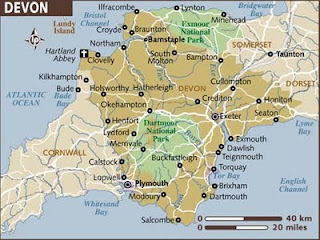 The next day, we set out on a weekend tour of southwestern England. First up was Dartmoor National Park; I wanted to go since it was so close to Exeter. Sadly, without a car and without bus services that only run on weekends, the best we could do was go to Okehampton (on the northwest border) and rent bicycles to go along the edge. Still, we took a little hike at one point just to see some wilder-looking countryside.
On Day 2 of our excursion, we headed east to Dorchester, the town on which Thomas Hardy based Casterbridge (see The Mayor of Casterbridge). This was because Heather is a Hardy fan and writing a chapter of her dissertation on his architecture. Therefore, we absolutely had to visit the house he designed and lived in. (Did you know he originally trained as an architect? I didn't.) We also stopped by the cottage where he was born and grew up.
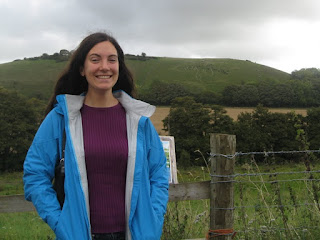
On our last day, we hit two ancient sites. First, and most giggle-inducing, was the Cerne Abbas Giant. (Pronounce that "Sern Abbas.") It's a figure drawn in a hillside just a bit north of Dorchester, just by scraping off the grass to reveal the chalk underneath -- and it's, well, anatomically correct. Read more about it here. We took a short hike up and around the field he's in, but (understandably) he's fenced off, so we couldn't get a good look at the drawing up close, just a sideways view of some squiggly lines.
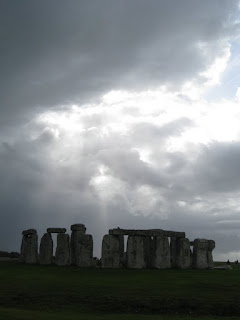
Last stop was Stonehenge. I had heard that it's fairly disappointing and all fenced off, but it's really not, at least if you've paid admission. In fact, the path gets quite close in certain spots. There was also a handy audio tour to explain the different sets of construction that happened over a few thousand years (what a timescale!). Of course, it was a bit hard to concentrate on some of it, because we got drenched in a little downpour. We were actually pretty lucky that we didn't get rained on until this point in the trip, and it was over pretty quickly. Plus, it gave us dramatic skies to make Stonehenge look even more mysterious.
We wrapped up by catching the tail end of evensong in Salisbury cathedral (love boys'/men's choirs!) and treating ourselves to a hearty and delicious meal at The Haunch of Venison, a restaurant that dates to at least 1320, when it was serving construction workers for the cathedral. That's crazy! All in all, a perfect weekend that went much, much more smoothly than our last outing.
I gave my paper in the last session, so Heather was able to come and hear it. I'm delighted to say that I was very pleased with the paper I finally gave, though I'd been tinkering with it until the night before. By necessity, it didn't include everything I learned about Kemble over the summer, but I think I told a neat, clean story. And since, as I'd guessed, hardly anyone had even heard of him, I was safe as the Kemble expert of that particular conference.
 The next day, we set out on a weekend tour of southwestern England. First up was Dartmoor National Park; I wanted to go since it was so close to Exeter. Sadly, without a car and without bus services that only run on weekends, the best we could do was go to Okehampton (on the northwest border) and rent bicycles to go along the edge. Still, we took a little hike at one point just to see some wilder-looking countryside.
On Day 2 of our excursion, we headed east to Dorchester, the town on which Thomas Hardy based Casterbridge (see The Mayor of Casterbridge). This was because Heather is a Hardy fan and writing a chapter of her dissertation on his architecture. Therefore, we absolutely had to visit the house he designed and lived in. (Did you know he originally trained as an architect? I didn't.) We also stopped by the cottage where he was born and grew up.

On our last day, we hit two ancient sites. First, and most giggle-inducing, was the Cerne Abbas Giant. (Pronounce that "Sern Abbas.") It's a figure drawn in a hillside just a bit north of Dorchester, just by scraping off the grass to reveal the chalk underneath -- and it's, well, anatomically correct. Read more about it here. We took a short hike up and around the field he's in, but (understandably) he's fenced off, so we couldn't get a good look at the drawing up close, just a sideways view of some squiggly lines.

Last stop was Stonehenge. I had heard that it's fairly disappointing and all fenced off, but it's really not, at least if you've paid admission. In fact, the path gets quite close in certain spots. There was also a handy audio tour to explain the different sets of construction that happened over a few thousand years (what a timescale!). Of course, it was a bit hard to concentrate on some of it, because we got drenched in a little downpour. We were actually pretty lucky that we didn't get rained on until this point in the trip, and it was over pretty quickly. Plus, it gave us dramatic skies to make Stonehenge look even more mysterious.
We wrapped up by catching the tail end of evensong in Salisbury cathedral (love boys'/men's choirs!) and treating ourselves to a hearty and delicious meal at The Haunch of Venison, a restaurant that dates to at least 1320, when it was serving construction workers for the cathedral. That's crazy! All in all, a perfect weekend that went much, much more smoothly than our last outing.
Tuesday, September 6, 2011
Back in the UK
Hello again everyone, this time from England.
Yes, those two weeks have elapsed, somehow. Hmm, how did I spend them? I picked up my new raincoat, which Marmot kindly replaced for me since my old one was losing its lining and therefore its waterproof nature. It's awesome that they provide that level of service, but I have to admit that part of me was sad to lose the jacket I wore nearly every day of my first year at Cambridge. I finished (or at least gave up on) my Kemble paper. I ate out at favorite restaurants and got in one day of quilting, which I haven't done in a year. And let's not forget watching Stanford's football team mop the floor with San Jose State, 57-3. That was a good last day in town.
On Sunday, I had a flawless travel day, which it's important to remember does happen sometimes. My flight from San Jose to Chicago was early leaving and had a tailwind, giving me plenty of time to mosey down to the next gate, and then we were nearly an hour early getting into London! Oh, and FYI: on Sunday of Labor Day weekend, a small airport like SJC has no one in it. There was literally no one behind me in the security line the entire time. When I arrived in London, I made my way to a hostel I like and met up with a couple friends for dinner. Then I managed to stay awake until a decent hour before crashing.
It's now morning, and I'm sitting in the hostel lounge looking out at the rain, wondering whether I should make an effort to go see/do something before taking a train to Exeter. I gotta say, the weather is not helping soften the blow of leaving home... Hopefully, a good week of conference and travel will cheer me up.
Subscribe to:
Posts (Atom)